Klöckner-Humboldt-Deutz AG
Founded in 1866 in Ulm by the local fire chief Conrad Dietrich Magirus, the company at first made only fire ladders and pumps; truck production began in 1916 and bus production in 1919. In 1936 it merged with the Cologne engineering company KHD (Klöckner-Humboldt-Deutz). After the Second World War Deutz air-cooled diesel engines were adopted, and the vehicles' brand became the double name Magirus-Deutz.
In the 1950s and 1960s Magirus-Deutz had the second-largest market share among German truck makers and was the market leader in fire and construction trucks. This period is characterised by two different generations of bonneted trucks: round-bonneted road trucks, and square-bonneted four-wheel-drive trucks and tippers. Magirus-Deutz was also the first German truck maker to put trucks with tilting cabs into production (in 1957). Because of the planetary gears used in their rear axles, the company's products in the second half of the 1950s and early 1960s bore the names of planets (Sirius, Mercur, Jupiter, Saturn, Uranus, Pluto).
From 1963 production of bonneted trucks was reduced, and the previous tilting cabs were replaced by the so-called cube-shaped tilting cabs designed by Louis Lucien Lepoix. From 1964 the planet names were also dropped in favour of a letter-and-number system based on engine power and gross weight.
In 1967 tilting-cab trucks designed by the German tractor maker Eicher were added to the range as light trucks (gross weight under 10 tonnes), and in the early 1970s the bonneted cabs dating from the 1950s were also replaced with new, squarer cabs. The main users of these vehicles were the military and municipal utilities.
From 1971 Magirus-Deutz, together with DAF, Saviem and Volvo, developed the so-called Club of Four cab for light and medium trucks to replace the models taken over from Eicher. These models went into production in 1976 as the Magirus-Deutz MK. Two years earlier a major contract (the so-called Delta project) had been signed with the Soviet Union, under which more than 8000 bonneted flatbeds, tippers and special vehicles were delivered, mainly for building the Baikal-Amur Mainline (BAM) and developing the Siberian oil fields.
In the mid-1970s the financial position of the parent company KHD deteriorated considerably because of the first oil crisis, the outdated generation of road trucks and heavy investment in the Club of Four cab and the construction of the Donautal plant. Negotiations with Mercedes-Benz to form an alliance failed, and from 1 January 1975 KHD formed a new company, Magirus-Deutz AG, 80% of which was acquired that autumn by IVECO, formed by Fiat a year earlier. In 1980 KHD sold its stake in IVECO to Fiat, and three years later IVECO finally dropped the Magirus-Deutz brand. Today only fire-fighting equipment (fire engines and aerial ladders) is built under the Magirus name.
Exhibits by this manufacturer (3)
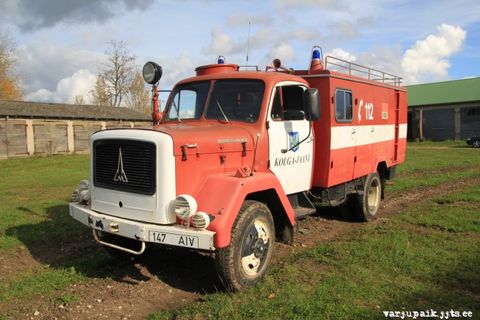 | #309 | Magirus-Deutz Mercur F125A | 1960 (šassii) | Fire engine |
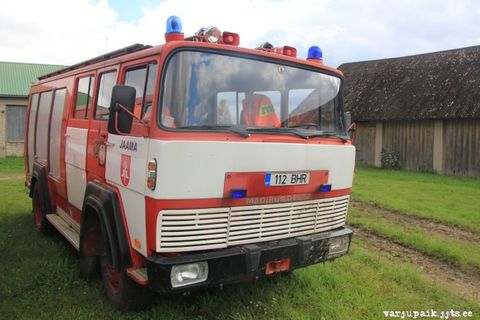 | #425 | Magirus-Deutz 135D 12FL | 1972 | Fire engine |
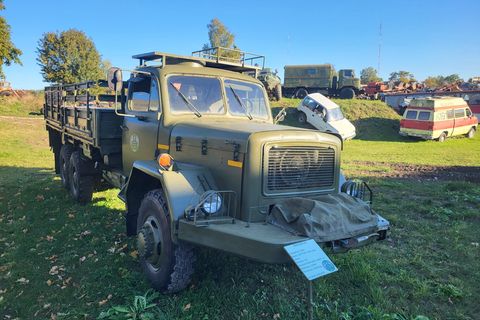 | #544 | Magirus-Deutz Jupiter 178D 15AL | 1979 | Truck |